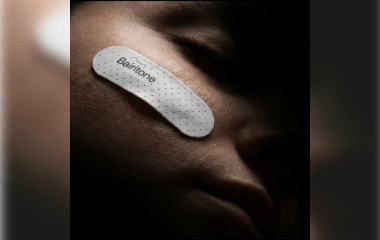
Bairitone Health received FDA Breakthrough Device Designation for Somnar, a non-invasive, skin-mounted “sleep sonar” sensor patch paired with an artificial intelligence-driven analysis platform that maps anatomy during sleep to identify the root cause of airway obstruction.
About Somnar
Somnar is a contact-based system that uses passive sleep sonar to capture the body’s natural vibrations during sleep and translate them into a dynamic map of upper airway behavior. Worn as a small facial patch, the sensor detects subtle tissue vibrations produced with each breath and uses AI analysis to map airway anatomy and function throughout the night.
The platform does not rely on MRI, X-ray, or ultrasound. Instead, it tracks airway behavior across sleep stages, body positions, and other physiologic conditions, allowing clinicians to identify where, when, and why airway collapse occurs. By pinpointing specific sites and mechanisms of obstruction, the platform supports more precise, personalized therapy guidance. Bairitone Health describes it as the first “anatomic polysomnogram.”
The platform is currently in the research and development phase and is not FDA-cleared for sale or clinical use. It is being used in investigational and clinical research settings.
In November 2025, Bairitone Health was named the winner in the diagnostics category for the inaugural AASM Sleep Disruptors Innovation Awards, recognizing the platform’s novel approach and potential to improve sleep care.
About the Breakthrough Devices Program
The FDA Breakthrough Devices Program is a voluntary program for certain medical devices that may offer more effective treatment or diagnosis of serious conditions, intended to provide patients and clinicians with more timely access by accelerating development and review while upholding rigorous standards for safety and effectiveness.
About obstructive sleep apnea
Obstructive sleep apnea is a serious sleep disorder where the airway becomes repeatedly blocked during sleep, causing pauses in breathing. This condition, often marked by loud snoring and choking noises, can lead to oxygen deprivation, disrupting sleep and contributing to various health issues such as high blood pressure, heart disease, stroke, and diabetes.
Read more industry news from the AASM.