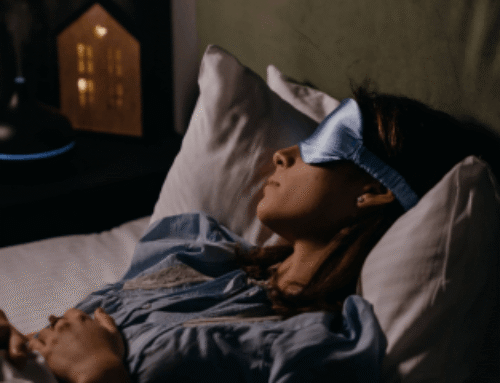
To highlight the critical role healthy sleep plays in students’ learning, health, and well-being, the American Academy of Sleep Medicine is hosting its seventh annual Student Sleep Health Week, Sept. 14-18. This year’s theme, “Sleep is Your Superpower,” spotlights how quality sleep can give kids the energy they need to succeed each day.
“Kids cannot perform their best physically, mentally, or emotionally without getting the right amount of healthy sleep,” said Dr. Anuja Bandyopadhyay, pediatric sleep physician and spokesperson for the AASM. “It’s important that consistent healthy sleep habits are established among students of all ages to help them stay focused, energized, and ready to learn throughout school and extracurriculars.”
Nighttime Distractions Affect Student Sleep
Healthy sleep is an important foundation for students, yet busy schedules, activities, and screen time can make it challenging for students to get the sleep they need. According to an AASM survey, parents report that a variety of activities can negatively affect their school-aged children and teens’ sleep schedules, led by video games (51%) and social media (44%), followed by homework (36%), hanging out with friends (22%), clubs, sports, and other activities (20%), and afterschool jobs (13%).
“Between screens, homework, activities, and social commitments, there are many things competing with sleep for a student’s time,” said Bandyopadhyay. “Parents can help by setting consistent boundaries around bedtime, including limiting screen use, planning ahead for homework and activities, and establishing a regular routine that gives children and teens enough time to get the healthy sleep they need.”
The AASM recommends that children between 6 and 12 years old get nine to 12 hours of sleep each night, and those between 13 and 18 years should get eight to 10 hours of sleep each night. Online tools, like the AASM bedtime calculator, can help parents identify the appropriate bedtime for their children by age and wake time.
Student Sleep Health Week Resources
Student Sleep Health Week is presented in conjunction with supporting partners Active Minds, American School Counselor Association, Let Me Run, National Association of School Nurses, Project Sleep, Sleep Research Society, Society for Health and Physical Educators, and Start School Later. Student Sleep Health Week was supported by a resolution in the U.S. House of Representatives in 2020. For more information about Student Sleep Health Week and instructions on how to enter a social media sweepstakes or educator raffle, visit the AASM’s Student Sleep Health Week site.
Educators interested in encouraging healthy sleep for students can access the AASM toolkit of educational resources, including lesson plans, posters, and classroom activities.
Look for social media content using the hashtag #SleepSuperheroes or #StudentSleepWeek and join the conversation about why it’s important for students to get the sleep they need to be healthy and successful.
###
About the Survey
The American Academy of Sleep Medicine commissioned an online survey of 2,007 adults in the U.S. The overall margin of error fell within +/- 2 percentage points with a confidence interval of 95 percent. Fieldwork took place between June 5-13, 2025, by Atomik Research, an independent market research agency. Respondents included 1,003 people who responded “yes” to “are you the parent or guardian of a child under the age of 18 who lives in your house.”
About the American Academy of Sleep Medicine
Established in 1975, the AASM is a medical association that advances sleep care and enhances sleep health to improve lives. The AASM membership includes more than 9,500 physicians, scientists, and other health care professionals who help people who have sleep disorders. The AASM also accredits 2,300 sleep centers that are providing the highest quality of sleep care across the country (aasm.org).